|
||||||||||||||||

|
||||||||||||||||
School NewsletterApril 2026Inspirations, Insights, and Staffing Solutions 
|
||||||||||||||||
Upcoming EventsConferences & Industry Opportunities |
||||||||||||||||
|
||||||||||||||||
|
||||||||||||||||
Educator FocusUsing Nature to Introduce Math in PreschoolBy Nicole Dravillas Fravel 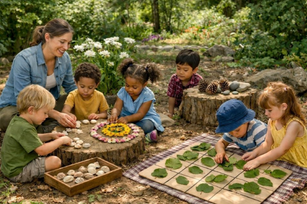
Math can sometimes feel like an abstract concept to teach to preschoolers: long sequences of numbers, complex graphs, division and multiplication symbols. In reality, math surrounds us. It’s in the spirals of a seashell, the concentric circles of flower petals, and the symmetry of a butterfly’s wings. We can use nature to make mathematical concepts concrete for young children. Following a Framework for Teaching Nature-Based Preschool MathA basic framework for teaching nature-based math involves sourcing natural materials, deciding what to teach using a child-centered lens, and then pairing the natural materials with classroom tools that will assist children in their learning goals. Sourcing materials: I recommend enlisting children’s help to gather the natural materials. Children are motivated to learn about things they collect in a space that is meaningful to them. Almost any small object you gather outside can be repurposed as a math manipulative. Follow the children’s interests: In deciding what to teach, you’ll want to have flexibility to follow the children’s lead. If you’re outside, all you need is a white bedsheet to spread on the ground. The sheet mimics a white sheet of paper but allows young children to build life-sized patterns, graphs, and sequences with natural materials. Pairing natural materials with classroom tools: Bringing natural manipulatives inside can also be an effective way of setting up math investigations for children. I recommend keeping sorted baskets of natural items on a shelf. You can add interest and spur investigations by pairing the natural loose parts with classroom tools that most preschool teachers already have. For example, you can add sorting trays, rulers, balances, mirrors, or ten frames to a basket of shells, depending on what your preschoolers need to practice. The most flexible classroom tool for natural math I’ve found is a simple pie plate or pizza box divided into four equal sections. We set these plates in our mud kitchen or dramatic play area for children to cook up some math fun. When children use small natural loose parts like flower petals, acorns, or pine cones to decorate their pies, it is a chance to talk about math concepts like symmetry and patterns. Just as the white bedsheet mimics a piece of paper, the divided plate or box mimics a pie chart, but life-sized and ready for the children to create. It is perfect for exploring concepts of “more or less” or for introducing fractions while remaining open-ended for creative play. Math doesn’t need to be abstract or taught by rote. By harnessing the beauty of math in nature, teachers can motivate preschoolers to learn through meaningful, hands-on exploration. *Excerpts taken from "Using Nature to Introduce Math in Preschool" by Nicole Dravillas Fravel |
||||||||||||||||
Activity of the Month!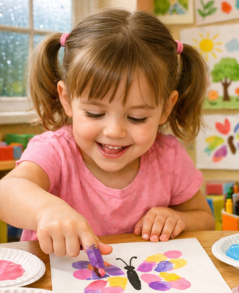
Fingerprint ButterfliesMaterials Needed:
Fingerprint Butterflies is a playful art activity that encourages creativity while strengthening fine motor skills. Children dip their fingers into washable paint and press fingerprints onto paper to create butterfly wings. Once the paint dries slightly, they can add bodies, antennae, and details using markers or crayons. This open-ended activity supports self-expression, color exploration, and hand-eye coordination while introducing children to insects and symmetry in a fun, developmentally appropriate way. |
||||||||||||||||
ChildCare Careers is your trusted partner in staffing. Need coverage or planning ahead? |
||||||||||||||||
| © ChildCare Careers | Unsubscribe | www.ChildCareCareers.com |